
Feed Someone Today
Current Food Insecurity in Canada: A Growing Crisis
Food insecurity—the inadequate or insecure access to food due to financial constraints—has reached record high levels in Canada. The latest statistics paint a concerning picture of this public health challenge that affects millions across the country.
Key National Food Insecurity Statistics
Based on the most recent data from the 2023 Canadian Income Survey (released in 2024):
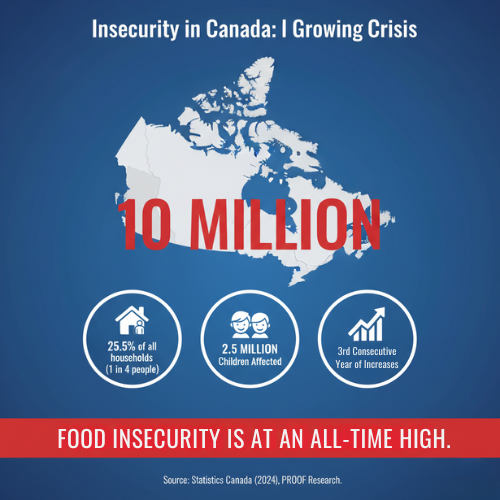
Total Affected Population (2024): Approximately 10 million people in the ten provinces lived in food-insecure households, including 2.5 million children.
Prevalence Rate (2024): 25.5% of individuals in the ten provinces lived in food-insecure households—an all-time high and the third consecutive year of increasing rates.
Severity of Insecurity (2024 Estimates):
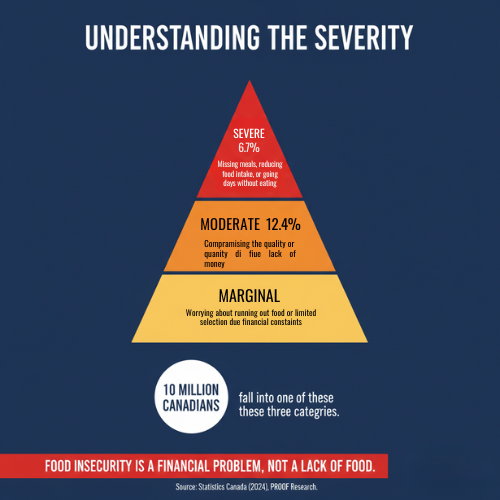
- Severely Food-Insecure: 6.7% of people (meaning they missed meals, reduced intake, or went days without food)
- Moderately Food-Insecure: 12.4% of people (meaning they compromised the quality or quantity of food)
- Marginally Food-Insecure: The remaining percentage worry about running out of food or have limited food selection due to financial constraints
Disparities and High-Risk Groups
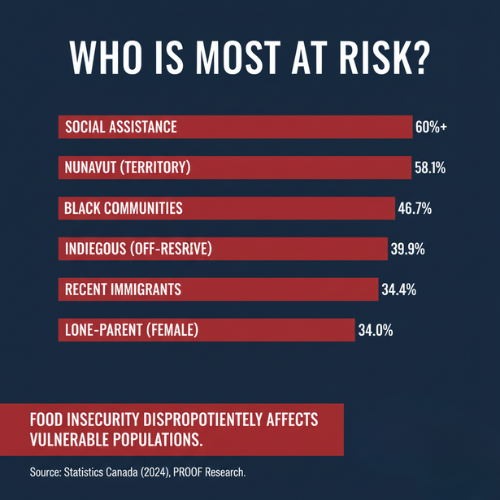
Food insecurity is not evenly distributed across the population. It disproportionately affects groups with lower and less secure incomes:
Black Communities: 46.7% (2024) Indigenous Peoples (off-reserve): 39.9% (2024) Recent Immigrants (10 years or less): 34.4% (2023) Female Lone-Parent Families: 34.0% (2022) Households Relying on Social Assistance: Over 60% are food insecure Children (Under 18): 32.9% lived in food-insecure households (2023)
Regional Differences
Food insecurity rates vary widely across Canada:
Nunavut (Territory, high cost): 58.1% Highest Provinces: Alberta (30.9%), Saskatchewan (30.6%), Newfoundland and Labrador (30.1%) Lowest Province: Quebec (19.8%)
Context: Food Bank Use
Food bank usage only represents a fraction of the food insecurity problem:
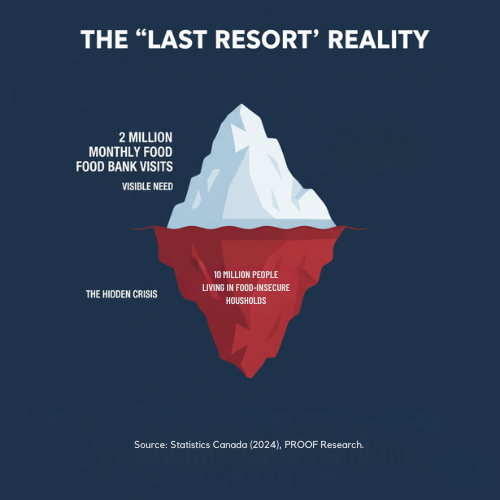
Visits: In March 2024, there were over 2 million visits to food banks in Canada—a record high and a 90% increase compared to 2019.
Underestimation: The number of people living in food-insecure households (10 million) is much larger than those using food banks, as charitable aid is often seen as a last resort.
The Root Cause
The underlying cause of household food insecurity is the lack of money for food, which is a symptom of larger issues regarding housing, income, and social program adequacy.
How You Can Help
At Ashers, we’re committed to raising awareness about food insecurity and the vital role local food banks and community kitchens play in our communities. We encourage everyone to consider supporting their local food banks whether by donating, volunteering, or helping spread awareness to strengthen access to nutritious meals for those in need across Canada.